

Safe, Smooth and Splash-Ready: What It Takes to Run a Successful Pool Season
May 8, 2026
Effective Community Management Communication: Keeping Homeowners and Residents Informed During Peak Season
June 3, 2026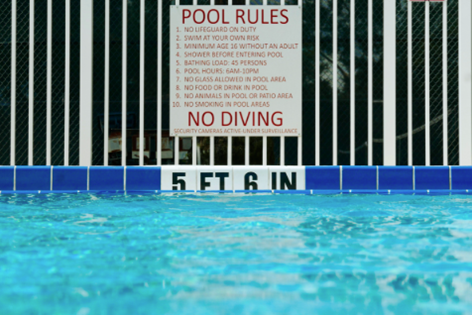
Swimming pools are among the most valued amenities in community associations, offering recreation, relaxation, and a sense of shared enjoyment. At the same time, they are also one of the most significant sources of risk for community associations. Accidents, injuries, and rule violations at the pool can expose communities to liability if not properly managed. Pool rules play a critical role in running a safe pool season, protecting homeowners, residents, board members, and the association itself by reducing risk and demonstrating responsible oversight.
Understanding why pool rules exist helps homeowners and residents see them not as restrictions, but as safeguards designed to protect the entire community.
Liability Risk at Community Pools
Swimming pools are considered high-risk amenities because they involve water, shared use, varying ages of users, and physical activity. Slips, falls, diving injuries, and medical emergencies can occur quickly, even in well-maintained facilities. When incidents happen, associations may be held responsible if it appears that reasonable steps were not taken to prevent foreseeable harm.
Liability does not depend solely on whether an accident occurs, but on whether the association demonstrated due diligence in safety planning, rule enforcement, and maintenance. Clearly written, properly enforced pool rules show that the community took proactive steps to create a safe environment.
Pool Rules as a Risk-Reduction Tool
Pool rules are designed to establish expectations for behavior and use while minimizing situations most likely to result in injury. Restrictions on running, diving, rough play, and alcohol consumption directly address common causes of pool-related accidents. Age requirements and supervision rules help ensure that minors are protected and that responsibility for their safety is clearly defined.
Guest policies and capacity limits help prevent overcrowding, which can contribute to accidents, reduced supervision, and strain on pool infrastructure. Rules regarding food containers, particularly prohibiting glass, reduce the risk of broken glass injuries in wet areas. Each rule addresses a specific risk identified by safety experts, insurers, or regulatory agencies.
When these rules are posted clearly and applied consistently, they reduce both the likelihood of incidents and the association’s exposure should an incident occur.
Regulatory Compliance and Legal Protection
Many pool rules are not optional but are tied directly to state and local health codes, safety standards, and insurance requirements. Regulations may dictate fencing specifications, gate access, signage, occupancy limits, emergency equipment, and operational hours. Failure to comply with these requirements can result in fines, forced closures, or increased insurance premiums.
From a legal standpoint, documented compliance matters. If a claim arises, an association’s ability to show that rules were in place, properly communicated, and enforced can be critical. Courts and insurance carriers often look at whether reasonable precautions were taken and whether residents were informed of those precautions.
Pool rules also support authority enforcement. When rules are formally adopted by the board and communicated to the community, management and pool staff are empowered to address violations before they escalate into incidents.
Protecting Boards and Volunteers
Board members serve their communities with the expectation that they are acting in the best interests of the association. Pool rules help protect board members from personal liability by demonstrating that risks were anticipated and addressed through formal policies.
When boards adopt reasonable rules based on professional standards, regulatory requirements, and insurance guidance, they reduce the likelihood of negligence claims. This protection extends to volunteers who help oversee community operations, reinforcing the value of thoughtful governance.
Education and Communication Build Support
Clear communication about pool rules helps build understanding and support among residents. Explaining the purpose behind rules, especially when changes are made, minimizes frustration and promotes cooperation. Proactive education also reduces the number of violations, creating a safer and more enjoyable pool environment.
Posting rules prominently, including them in community communications, and reinforcing them at the start of the season ensures that expectations are understood. Transparency strengthens trust between homeowners, residents, boards, and management.
Shared Responsibility
Pool safety and liability protection are shared responsibilities. While management and boards provide structure, oversight, and enforcement, residents play an essential role by following posted rules and supervising guests. When everyone takes ownership of safety, the pool remains a valuable amenity rather than a liability risk.
At Corner Property Management, pool rules are viewed as an essential part of responsible community management. By prioritizing safety, consistency, and compliance, associations can protect residents, reduce liability exposure, and ensure that pool season remains a positive experience for the entire community.
New Jersey:
Lawrence N. Sauer, CMCA PCAM CPM at 973-376-3925, ext.129 or email larry.sauer@cp-management.com
Pennsylvania:
Andrew Batshaw at 973-376-3925, ext.191 or email andrew.batshaw@cp-management.com